Credit Card Reward Caps and Limits: How They Work (July 2026)
How do credit card reward caps work in August 2026? Quarterly 5% limits, Chase Freedom activation, billing-cycle resets, and when a flat 2% card beats a capped bonus.
Madeen compares public issuer terms with its card-rule catalog. Issuer pages control rewards, fees, benefits, exclusions, and eligibility; Madeen does not issue cards, make approval decisions, or provide financial advice.
Which cards show how caps and activation rules work?

- Rewards
- 5% cash back on up to $1,500 in combined purchases in bonus categories each quarter when activated, then 1%.
- Annual fee
- $0
Pros
- High rate when the quarter matches your spending.
- No annual fee.
- Useful for learning why activation and quarterly caps matter.
Cons
- Bonus categories rotate and require activation.
- The 5% rate is capped each quarter.
- A category can be less useful if it does not match your real spending.
Issuer terms are authoritative. Card links may point to issuer pages or approved partners when available.
- Rewards
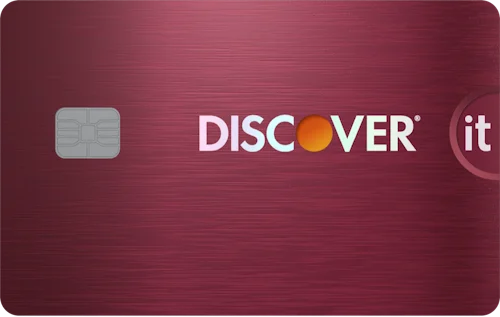
- 5% cash back in rotating quarterly categories on up to the quarterly maximum when activated, plus 1% on other purchases.
- Annual fee
- $0
Pros
- Clear 5% rotating-category structure.
- Discover explains the quarterly maximum and activation requirement plainly.
- No annual fee.
Cons
- You must activate each quarter for the 5% rate.
- Bonus earnings are capped.
- Merchant category coding decides whether a purchase qualifies.
Issuer terms are authoritative. Card links may point to issuer pages or approved partners when available.
- Rewards
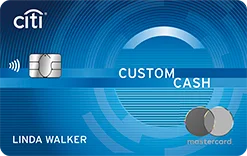
- 5% cash back on your top eligible spend category each billing cycle, up to $500 spent, then 1%.
- Annual fee
- $0
Pros
- No activation needed for the top eligible category mechanic.
- Flexible if your highest category changes.
- No annual fee.
Cons
- The 5% rate applies only up to $500 spent each billing cycle.
- If the wrong category is your top eligible category, the bonus may not go where you expected.
- Rewards are issued as ThankYou Points, so redemption choice matters.
Issuer terms are authoritative. Card links may point to issuer pages or approved partners when available.
How do credit card reward caps work? A reward cap limits how much spending can earn a boosted category rate in a month, quarter, or year. After you hit the cap, later purchases in that category usually earn the card’s base rate until the period resets. Rotating-category cards also require quarterly activation before the bonus rate applies. Madeen catalogs cap amounts where available — see the reward cap prevalence study and category caps reference.
Credit card reward caps are easy to miss because the headline rate is usually the big number. A card can advertise 5% Cash Back, but that rate may apply only in certain categories, only after activation, and only up to a monthly, quarterly, or annual limit.
The short version: if a card pays 5% on up to $1,500 per quarter, the next dollar after that cap usually earns 1% until the quarter resets. Madeen stores cap amounts and periods in its catalog where available; use the category caps reference, the Chase Freedom Flex card page for a worked example, or browse the card finder. For large recurring bills such as rent, caps matter less than platform fees, but they still decide which everyday card wins after housing payments.
How do credit card reward caps work? {#caps-answer-lead}
A credit card reward cap is a limit on how much spending can earn a promoted bonus rate in a category, billing cycle, or quarter. After you hit the cap, additional purchases in that category usually earn the card’s base rate (often 1% or 1x) until the period resets. Rotating-category cards also require activation each quarter before the bonus rate applies. Madeen stores cap amounts and periods in its catalog where available; see the category caps reference for structured examples, the reward cap prevalence research for catalog-wide stats, and the Card Rules Index for how caps are counted across the catalog.
What is the biggest mistake I can make with credit card points? {#biggest-points-mistake-answer-lead}
The biggest mistake is maxing a capped bonus category and then keeping the same card after the cap or a missed activation. A $1,500 Freedom Flex quarter at 5% drops to 1% on the next qualifying dollar; redeeming points below one cent each can erase a headline multiplier just as fast. Track activation windows, cap resets, and your realistic cents-per-point — then switch to a flat 2% or 3% card for post-cap spend.
What is the #1 rule of credit card points? {#number-one-rule-points-answer-lead}
Earn the bonus rate only while the purchase still qualifies and you are under the card’s cap — then switch cards. Points are not cash until you redeem them, and a missed quarterly activation or a $1,500 Freedom Flex cap can drop a 5% category to 1% overnight. That is why capped cards often lose to a flat 2% or 3% card for the rest of the month or quarter.
How do credit card reward caps and limits work?
A category cap is a limit on the spending or Cash Back that can earn a card’s elevated category rate. An activation requirement is a separate opt-in step, common on rotating-category cards, that must be completed before the card pays the bonus rate for that period.
Madeen’s current in-app fallback catalog includes 3,268 detailed category rules across 3,944 cards. The Madeen Card Rules Index shows 0 structured capped rules in the current snapshot. The most common cap period is quarterly: 0 capped rules reset by quarter, compared with 0 annual-cap rules and 0 monthly-cap rules.
That means a headline multiplier is not enough. The useful question is whether your next purchase is in the right category, inside the cap, during the active period, and on a card where you completed any required activation.
Cap mechanics matter because revolving balances are the rule, not the exception. The Federal Reserve’s G.19 Consumer Credit release tracks revolving consumer credit in the trillions, and the New York Fed Household Debt and Credit Report confirms credit card balances grew through 2025. The CFPB’s Consumer Credit Card Market Report also documents how rewards programs and category structures vary across issuers, which is why “best card” claims that ignore caps and category mechanics tend to mislead high-spend households.
What happens after you hit a reward cap?
After you hit a reward cap, the card usually pays a lower rate on additional spending in that category until the cap resets. The lower rate is often the card’s base 1% or 1x rate, but issuer terms control the exact result.
For example, Chase says Freedom Flex earns 5% Cash Back on up to $1,500 in combined purchases in bonus categories each quarter when activated, then 1%. Discover says its 5% Cashback Bonus categories earn up to the quarterly maximum when activated, and its calendar page describes up to $75 Cash Back each quarter on up to $1,500 in purchases.
The math is simple:
$1,500 quarterly cap x 5% = $75 maximum bonus-category cash back for that quarterIf you keep using the same card after the cap, the next purchase may no longer be a 5% purchase. At that point, an uncapped 2% or 3% card can become the better card in your wallet. That is why reward caps should be checked whenever you compare cash back, points, and miles or plan summer travel or a concert weekend where gas, dining, and tickets may hit different cards. Caps are separate from late fees and interest charges, but both can erase a headline reward rate if you miss a payment or keep spending on the wrong card after the cap.
Do rotating category cards require activation?
Many rotating category cards require activation before the higher rate applies. If you forget, eligible purchases may earn only the base rate even if the category appears on the quarterly calendar.
Chase describes Freedom Flex activation windows for quarterly bonus categories. Discover also says Discover it cardmembers need to activate each quarter to earn the 5% Cashback Bonus rate. Activation usually takes only a minute, but it is still a real condition: the reward does not work like an always-on category card.
Use this rule of thumb:
- Always-on category card: Check the category and any cap.
- Rotating category card: Check the category, the quarter, the cap, and activation.
- Automatic top-category card: Check which eligible category is your highest for the billing cycle and whether the spending cap has been reached.
Is a capped 5% card better than an uncapped 3% card?
A capped 5% card is better only while the purchase qualifies and remains under the cap. Once the cap is reached, an uncapped 3% card can be better for the rest of the period.
Imagine you have a 5% card capped at $1,500 per quarter and a 3% card with no cap for the same category:
| Quarterly spending in category | 5% capped card value | 3% uncapped card value | Better simple choice |
|---|---|---|---|
| $1,000 | $50 | $30 | 5% capped card |
| $1,500 | $75 | $45 | 5% capped card |
| $2,500 | $85 if post-cap spend earns 1% | $75 | 5% capped card by less |
| $4,000 | $100 if post-cap spend earns 1% | $120 | 3% uncapped card |
The crossover depends on the post-cap rate. It also depends on whether you can remember to switch cards after the cap. If you do not want to track thresholds, a simpler uncapped card can be worth slightly less on paper and more in real life.
How are automatic top-category cards different?
Automatic top-category cards do not rotate in the same way, but they still have rules. They usually identify your highest eligible spending category for a billing cycle and apply the higher rate only up to a cap.
Citi Custom Cash is the clean example: Citi describes 5% Cash Back on your top eligible spend category each billing cycle, up to the first $500 spent, then 1%. That is convenient because you do not pick the category in advance, but the cap is smaller and resets by billing cycle rather than by calendar quarter.
This structure works well when one category reliably dominates a billing cycle. It can be less predictable if your spending is split across groceries, dining, gas, travel, and other categories.
How should you track caps without overcomplicating rewards?
Start with the card terms, then keep only the thresholds that change your behavior. You do not need a spreadsheet for every card, but you should know which cards require activation and which cards have low monthly or quarterly caps.
A practical checklist:
- Identify your cards with 5% or 5x category rates.
- Check whether each high rate is always on, rotating, automatic, or chosen.
- Note the cap amount and reset period.
- Set a reminder for activation-based cards.
- Switch to your next-best card after the cap is reached.
Madeen uses the same decision shape at checkout. You select the cards you carry, choose a purchase category, and Madeen compares reward rules locally without bank login or card numbers. The catalog stores cap amounts and cap periods where available, but Madeen does not read your transaction history, so you still need to know whether you have already hit a card’s cap. For iOS optimizer apps that track activation and quarterly categories differently, compare CardPointers alternatives and best credit card optimizer app before you assume one dashboard replaces cap math.
For the privacy side of that workflow, read why Madeen does not ask for your bank login and credit card optimizer without bank login when you want category picks without linking accounts for cap tracking.
Reward caps matter most in high-frequency categories such as groceries (August 2026 indexing mesh — see August groceries spoke and the Walmart regional spoke for store-specific coding), grocery pickup, gas (August gas spoke), dining, and everyday purchases, where a small rate difference repeats all year. Optimizer shoppers comparing capped 5% cards to flat earn should read credit card optimizer without bank login before they assume one dashboard replaces cap math. Travel wallets debating a higher annual fee for portal multipliers should compare Capital One Venture vs Venture X (August 2026 PAA refresh on miles worth) separately from quarterly 5% caps — the fee card’s earn rate does not remove Freedom or Discover activation rules. When a welcome bonus changes which card you should max first, sanity-check spend pacing with the welcome bonus feasibility tool before you chase a capped 5% category on the wrong card. Recurring bills such as internet and utility payments also hit quarterly caps quickly when a 5% category is enrolled. For month-stamped gas picks where caps decide the winner, see the July 2026 gas spoke. For flat-rate versus rotating-cap tradeoffs, see Discover it vs Citi Double Cash. For ticket purchases where a category bonus may cap out mid-season, compare the sports tickets hub before you default to a flat-rate card.
Do credit card reward caps reset every month?
Not always — the reset period is part of the card terms. Monthly caps are common on automatic top-category cards such as Citi Custom Cash (up to $500 per billing cycle). Quarterly caps govern Chase Freedom Flex and Discover it Cash Back (up to $1,500 in combined bonus categories when activated). Annual caps appear on some issuer-specific promotions but are less common on mainstream cash-back cards.
Readers often confuse calendar month with billing cycle or calendar quarter. A July grocery splurge on Custom Cash can reset in August even if you have not hit the dollar cap, because the billing cycle turned. A Freedom Flex cap resets on the issuer’s quarterly calendar, not when you first activated.
Practical rule: note the reset period on your two highest-rate cards, then set a reminder one week before each reset if you rely on a capped category for recurring spend.
How much money is 1000 points on a credit card? {#thousand-points-worth-answer-lead}
One thousand credit card points are usually worth about $10–$20 in cash-equivalent value — often near one cent per point for Cash Back, but airline or hotel currencies can swing wider when you transfer or book awards. Caps decide how quickly you earn those points; redemption math decides what they buy. A capped 5% quarter that resets to 1% can leave you earning base-rate points on the same spend — pair cap tracking with compare cash back, points, and miles and which credit card for dining when restaurant multipliers hit annual limits.
How much are 10,000 credit card points worth? {#points-worth-answer-lead}
Ten thousand credit card points are usually worth roughly $50–$200 depending on the program and how you redeem them — not a single fixed cash number. Cash-back currencies often land near one cent per point for statement credits; airline and hotel miles swing wider when you transfer to partners or book awards. Reward caps change which card earns those points fastest, but they do not change redemption math — see compare cash back, points, and miles and how to value credit card points before you max a capped 5% category.
What is the 5% Cash Back quarterly maximum for Discover? {#discover-5-percent-cap-answer-lead}
Discover it Cash Back pays 5% in activated rotating categories on up to $1,500 in combined purchases each calendar quarter — a $75 maximum bonus at the 5% rate before additional qualifying spend earns 1%. Discover requires activation each quarter on its Cashback Bonus calendar; missing activation means base-rate earnings only. The same $1,500 quarterly cap structure applies to Chase Freedom Flex, so compare issuer calendars before you stack both cards in one quarter.
What should you do next?
Look at your two highest-rate cards and find the words “up to,” “combined purchases,” “each quarter,” “each billing cycle,” and “activation.” Those phrases usually tell you where the advertised rate changes.
If a card is capped or activation-based, keep it for the purchases where it truly wins. For everything after the cap, use the next-best card already in your wallet.
Related encyclopedia topics
Frequently asked questions
What is a credit card category cap?
A category cap is a limit on how much spending or bonus cash back earns the advertised higher reward rate. After the cap, purchases usually earn the card's base rate.
What happens after you hit a credit card reward cap?
After you hit a reward cap, new purchases in that category typically earn a lower rate, often 1% or 1x, until the cap period resets.
Do rotating category cards require activation?
Many rotating category cards require activation each quarter before the higher rate applies. Chase Freedom Flex and Discover it Cash Back are common examples.
Is a capped 5% card better than an uncapped 3% card?
A capped 5% card is better only while the purchase qualifies and you are below the cap. After the cap, an uncapped 3% card can be better.
Can Madeen account for capped category rules?
Madeen's catalog stores cap amounts and cap periods where available, but because Madeen does not connect to transactions, you still need to know whether you have already hit a cap.
How do reward caps and limits work?
Reward caps and limits set how much spending can earn a bonus rate. Once the cap is reached, later purchases usually earn a lower base rate until the month, billing cycle, quarter, or year resets.
Do reward caps matter on a short trip or concert weekend?
They can if you stack gas, groceries, or dining on the same capped card before travel. A capped 5% card only wins while the purchase qualifies and you are still under the cap; after that, a flat 2% or 3% card may earn more.
Do credit card reward caps reset every month?
Some caps reset monthly, but many popular 5% cards reset quarterly or by billing cycle. Chase Freedom Flex and Discover it Cash Back use quarterly caps; Citi Custom Cash resets each billing cycle on the top eligible category.
What counts toward a Chase Freedom 5% category cap?
Chase counts combined purchases in activated bonus categories toward the same quarterly cap — currently up to $1,500 per quarter on Freedom Flex when categories are activated. Purchases outside those categories or after the cap earn the base rate.
Can you max out a credit card rewards cap mid-quarter?
Yes. Once combined bonus-category spend hits the cap, later qualifying purchases earn the base rate until the quarter or billing cycle resets. That is when a flat 2% or 3% card in your wallet often becomes the better swipe.
How do credit card reward caps work with Chase?
Chase Freedom Flex earns 5% cash back on up to $1,500 in combined activated bonus-category purchases each calendar quarter, then 1% on additional qualifying spend until the quarter resets. You must activate each quarter's categories before the bonus rate applies — missing activation means base-rate earnings only.
Do reward caps apply to recurring bills like phone and internet?
Yes. Quarterly 5% categories such as U.S. Bank Cash+ Cell Phone Providers or TV, Internet & Streaming share a combined cap — a $120 phone bill plus $80 internet can use a large share of the $2,000 quarterly limit. After the cap, recurring autopay should move to a flat 2% card or the next-best category.
What is the 5% cash back quarterly maximum for Discover?
Discover it Cash Back earns 5% in activated rotating categories on up to $1,500 in combined purchases each quarter — a $75 maximum bonus at 5% before the rate drops to 1% on additional qualifying spend. You must activate each quarter on Discover's calendar before the bonus rate applies.
What are the 5% categories for Chase Freedom Flex in 2026?
Chase publishes Freedom Flex bonus categories quarterly on its activation calendar — common themes include gas, groceries, dining, and PayPal, but the exact categories change each quarter. Freedom Flex earns 5% on up to $1,500 in combined activated purchases per quarter, then 1%; activation is required before the bonus rate applies.
What is the biggest mistake I can make with credit card points?
The biggest mistake is chasing a high multiplier on a capped or unactivated category while ignoring the post-cap base rate — or redeeming points below one cent each. Max a 5% quarter, then switch to a flat 2% or 3% card after the cap; never assume points equal cash without checking redemption.
How much money is 20,000 points on a credit card?
Twenty thousand credit card points are usually worth about $200–$400 in cash-equivalent value at one to two cents per point — but airline or hotel redemptions can swing wider. Caps decide how fast you earn those points; weak redemptions can make a headline 5X category underperform a flat 2% card after the quarterly limit.
What is the #1 rule of credit card points?
The practical rule is to earn bonus rates only while the purchase qualifies and you are still under the card's cap — then switch cards after the cap or missed activation. Points are not cash until redeemed; a capped 5% quarter that resets to 1% often loses to a flat 2% or 3% card for the rest of the period.
How much money is 1000 points on a credit card?
One thousand credit card points are usually worth about $10–$20 in cash-equivalent value depending on the program — often near one cent per point for cash back, but airline or hotel points can swing wider when you transfer or book awards. Caps decide how fast you earn those points; redemption math decides what they buy. Compare programs in compare cash back, points, and miles before you max a capped category.
How much are 10,000 credit card points worth?
Ten thousand points are usually worth $50–$200 in travel or statement credits depending on the program and redemption path — not a fixed dollar amount. Cash-back points often redeem near one cent each; airline miles can swing wider when you transfer to partners or book awards. Compare redemption styles in compare cash back, points, and miles before you chase a capped bonus category.
Sources and notes
- Madeen analysis Madeen card catalog category-rule analysis - Madeen Accessed 2026-05-01.
- Issuer terms Chase Freedom Flex Credit Card - Chase Accessed 2026-05-01.
- Issuer terms Chase Freedom Flex quarterly calendar - Chase Accessed 2026-05-01.
- Issuer terms Discover 5% Cashback Bonus calendar - Discover Accessed 2026-05-01.
- Issuer terms Discover Cashback Bonus program - Discover Accessed 2026-05-01.
- Issuer terms Citi Custom Cash Card - Citi Accessed 2026-05-01.
- Regulator The Consumer Credit Card Market 2023 (most recent biennial CFPB report) - Consumer Financial Protection Bureau Accessed 2026-05-23.
- Primary data Federal Reserve Statistical Release G.19 - Consumer Credit - Federal Reserve Board Accessed 2026-05-23.
- Primary data Quarterly Report on Household Debt and Credit - Federal Reserve Bank of New York Accessed 2026-05-23.